- Creatine does not burn fat directly, because it is not a fat burner, it is a training supplement that helps muscles work harder.
- Creatine helps fat loss indirectly, because stronger training builds muscle, and muscle burns more calories at rest.
- The danger is the water weight, because creatine pulls water into muscles and the scale may rise by 1 to 2 kilograms in the first weeks.
- The best results come when creatine pairs with strength training, protein, and a small calorie deficit.
Does Creatine Help With Fat Loss And What It Really Does

When people ask does creatine help with fat loss, they usually want a simple yes or no answer. The honest answer is no, not directly, because creatine does not burn fat, it helps muscles work harder during training. Weight loss always comes from a calorie deficit, which means no supplement can replace food and exercise.
Creatine helps fat loss indirectly, because stronger training builds more muscle, and muscle burns more calories at rest. A person who trains harder with creatine may lift 5 to 10 percent more weight, which means more muscle built over months. That extra muscle raises the daily calorie burn, which makes the deficit easier to hold.
The key word is indirect, because creatine is a training tool, not a fat burner. Take it daily, train with weights 3 to 4 times per week, eat protein at every meal, and keep a small calorie deficit. A plan that uses creatine as support, not as magic, is the plan that works.
How Creatine Works In The Body
Creatine is a natural compound that the body makes from amino acids, and it also comes from meat and fish in food. The body stores creatine in muscles, where it helps make ATP, which is the quick energy muscles use for short hard efforts like lifting weights and sprinting. More creatine in the muscle means more quick energy for 1 or 2 extra reps per set.
The body holds about 120 grams of creatine in total, with 95 percent stored in muscles. A daily dose of 3 to 5 grams fills the muscle stores in about 4 weeks, while a loading dose of 20 grams per day fills them in 5 to 7 days. Food alone gives only 1 to 2 grams per day, which is why a supplement helps people who train hard.
Creatine also pulls water into muscle cells, which makes muscles look fuller and helps them work better. That water adds 1 to 2 kilograms on the scale in the first weeks, which is water weight, not fat. The scale may rise while the body gets leaner, which is why measurements and photos matter more than weight alone.
7 Honest Facts About Creatine And Fat Loss
These facts explain does creatine help with fat loss in simple words, without hype or false promises. Read all 7 before buying any supplement.
- Creatine does not burn fat directly. No study shows creatine melting fat on its own, because fat loss needs a calorie deficit, and creatine holds zero fat burning power. Anyone who sells creatine as a fat burner is selling hype, not science.
- Creatine helps you lift more weight. Studies show creatine raises strength by 5 to 15 percent, which means more reps, more sets, and more muscle built over months. More muscle means a higher daily calorie burn, which supports fat loss indirectly.
- Creatine protects muscle during a diet. A calorie deficit can cost muscle as well as fat, but creatine plus strength training helps keep muscle while fat drops. Keeping muscle matters, because muscle keeps the metabolism high and stops the skinny fat look.
- Creatine causes water weight gain. Creatine pulls water into muscle cells, which adds 1 to 2 kilograms on the scale in the first 2 to 4 weeks. That weight is water, not fat, and it drops within 2 to 4 weeks of stopping creatine.
- Creatine works best with strength training. Creatine without training gives almost no benefit, because the extra energy only helps when muscles work hard. Train with weights 3 to 4 times per week, and creatine earns its place in the routine.
- Creatine is safe for most healthy adults. Hundreds of studies over 30 years show creatine monohydrate is safe at 3 to 5 grams per day, with no proven harm to kidneys or liver in healthy people. Drink 2 to 3 liters of water per day, and skip creatine if you have kidney disease without asking a doctor first.
- Creatine monohydrate is the best type. Creatine monohydrate is the most studied, cheapest, and most effective form, with hundreds of studies behind it. Other types like creatine HCl cost more with no proven extra benefit, so save the money and buy plain monohydrate powder.
Creatine Compared With Fat Burners
People who ask does creatine help with fat loss often compare it with fat burner pills, which is a different thing. Fat burners usually hold caffeine and stimulants that raise heart rate and suppress appetite for a few hours, while creatine holds no stimulants and works by helping muscles train harder. Fat burners give a short energy boost, while creatine gives long term strength gains.
Side effects also differ, because fat burners can cause jitters, fast heart rate, and poor sleep, while creatine causes only mild water weight and occasional stomach upset. Creatine has hundreds of studies over 30 years, while most fat burners have almost no proof. A supplement with 30 years of proof beats a pill with marketing only.
Cost is close, because creatine monohydrate costs around 10 to 15 dollars per month, while fat burner pills cost 30 to 50 dollars per month. Creatine gives real strength gains for less money, while fat burners give mostly caffeine for more money. Choose creatine for training support, skip fat burners, and let the calorie deficit do the fat loss work.
How To Take Creatine For Fat Loss
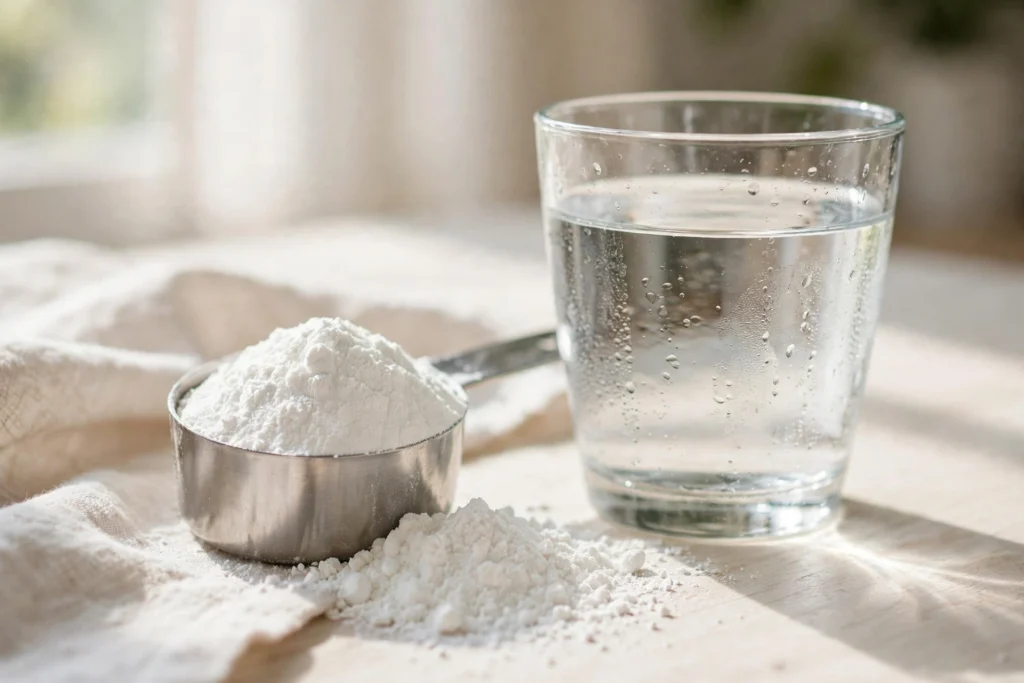
Take 3 to 5 grams of creatine monohydrate per day, mixed in water or juice, at any time of day. The time does not matter much, because creatine works by filling muscle stores over weeks, not by one dose before training. Take it every day, including rest days, and the stores stay full.
Loading is optional, because 20 grams per day for 5 to 7 days fills the stores faster, but 3 to 5 grams per day fills them in 4 weeks with the same end result. Loading can cause more stomach upset and faster water weight gain, so most beginners do better with the simple daily dose. Pick one method, stay consistent, and let the training do the work.
Drink 2 to 3 liters of water per day while taking creatine, because creatine pulls water into muscles and the body needs extra fluid. Eat protein at every meal, train with weights 3 to 4 times per week, and keep a small calorie deficit of 300 to 500 calories. Creatine supports the plan, but food and training decide the result.
Creatine And Water Weight Explained
Creatine pulls water into muscle cells, which adds 1 to 2 kilograms on the scale in the first 2 to 4 weeks. That weight is water inside the muscle, not fat under the skin, and it actually helps muscles look fuller and work better. The scale may rise while the waist gets smaller, which confuses many beginners.
The water weight is temporary, because it drops within 2 to 4 weeks of stopping creatine, and it returns within 2 to 4 weeks of starting again. That cycle is normal and harmless, and it does not mean the diet failed. Judge progress by waist measurements, photos, and strength numbers, not by the scale alone.
Drink 2 to 3 liters of water per day to manage the water balance, because dehydration makes the water retention worse, not better. Avoid high salt meals on the same days, and keep the daily routine steady. A person who understands water weight never quits creatine over a scale number.
Common Creatine Mistakes Beginners Make
The biggest mistake is expecting creatine to burn fat on its own, because creatine without training and without a calorie deficit gives almost no fat loss. A supplement cannot replace food and exercise, and anyone who promises that is selling hype. Use creatine as training support, and let the deficit do the fat loss work.
Skipping days is another common fault. Creatine works by keeping muscle stores full, and missing 2 to 3 days per week keeps the stores half empty. Take 3 to 5 grams every day, including rest days, and set a daily reminder until the habit sticks.
Buying expensive creatine types is the quietest error, because creatine HCl, buffered creatine, and liquid creatine cost 3 to 5 times more with no proven extra benefit. Buy plain creatine monohydrate powder, mix it in water, and save the extra money for good food. A cheap supplement with 30 years of proof beats an expensive one with marketing only.
How To Combine Creatine With Training And Diet
Creatine works best inside a simple daily routine. Take 3 to 5 grams every morning, train with weights 3 to 4 times per week, eat protein at every meal, and keep a small calorie deficit of 300 to 500 calories. That routine builds muscle, protects the metabolism, and makes fat loss steady over months.
Daily walking pairs well with creatine habits, because a 30 minute walk burns roughly 120 to 150 calories, which adds to the deficit without any gym. That simple balance keeps fat loss moving without hunger, and it teaches consistency better than strict rules. A week with daily walks beats a week without them, because small habits add up fast.
Sleep plays a larger role than most people expect. Poor sleep raises hunger hormones and lowers the energy for training, which makes weight loss harder even with a good eating plan. Progress should be judged by more than the scale, because creatine builds muscle and holds water even in weeks when the scale moves slowly. Measurements, photos, and how clothes fit tell a fuller story than weight alone.
FAQs
Does creatine burn fat directly?
No, creatine does not burn fat directly, because it is a training supplement, not a fat burner. Creatine helps muscles work harder during training, which builds more muscle over months, and muscle burns more calories at rest. Fat loss always comes from a calorie deficit, so creatine only helps when it pairs with strength training, protein, and a small deficit. Anyone who sells creatine as a fat burner is selling hype, not science.
Will creatine make me gain weight?
Yes, creatine usually adds 1 to 2 kilograms in the first 2 to 4 weeks, but that weight is water inside the muscles, not fat. Creatine pulls water into muscle cells, which makes muscles look fuller and work better, and the scale may rise while the waist gets smaller. That water weight drops within 2 to 4 weeks of stopping creatine. Judge progress by waist measurements, photos, and strength numbers, not by the scale alone.
How much creatine should I take per day?
Take 3 to 5 grams of creatine monohydrate per day, mixed in water or juice, at any time of day. The time does not matter much, because creatine works by filling muscle stores over weeks, not by one dose before training. Take it every day, including rest days, and the stores stay full. Loading with 20 grams per day for 5 to 7 days fills the stores faster, but the simple daily dose gives the same end result in 4 weeks.
Is creatine safe for beginners?
Yes, creatine monohydrate is safe for most healthy adults, with hundreds of studies over 30 years and no proven harm to kidneys or liver at 3 to 5 grams per day. Drink 2 to 3 liters of water per day, and skip creatine if you have kidney disease without asking a doctor first. Mild stomach upset is the most common side effect, and it usually passes when the dose is split into 2 smaller doses per day. Teenagers and pregnant women should check with a doctor before starting any supplement.
Do I need to exercise while taking creatine?
Yes, creatine without training gives almost no benefit, because the extra energy only helps when muscles work hard. Train with weights 3 to 4 times per week, and creatine earns its place in the routine. A person who takes creatine without training gains only water weight, with no strength or fat loss benefit. Pair creatine with strength training, protein at every meal, and a small calorie deficit, and the results follow over months.
Conclusion
Creatine is a training supplement, not a fat burner, and that honest truth matters. So does creatine help with fat loss, the answer is yes, but only indirectly through training and muscle. Take 3 to 5 grams of creatine monohydrate daily, train with weights 3 to 4 times per week, eat protein at every meal, and keep a small calorie deficit. Expect 1 to 2 kilograms of water weight in the first weeks, judge progress by measurements and photos, and let the routine work over months. That steady combination turns creatine into a useful part of lasting fat loss.