- Swimming burns 400 to 700 calories per hour depending on stroke, speed, and body weight, while staying gentle on the joints.
- It works the full body at once, which builds lean muscle and raises daily energy use over time.
- Most beginners do well with 2 to 3 sessions per week, 20 to 30 minutes each, at a steady and comfortable pace.
- The fastest results come when swimming pairs with daily walking, protein rich meals, good sleep, and steady calorie control.
Swimming for weight loss And How It Burns Fat
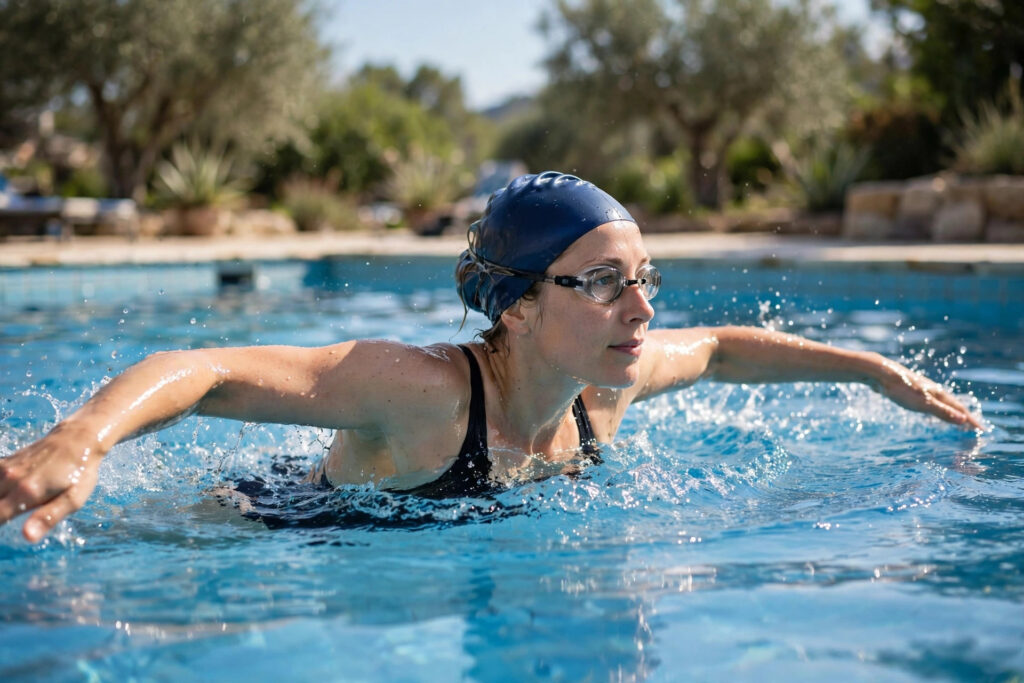
When people ask about swimming for weight loss, they usually want to know if pool workouts really burn enough fat to matter. The answer is yes, and the reason is simple. Water resists every movement, so arms, legs, and core all work at the same time. That full body effort raises the heart rate, burns a high number of calories, and builds lean muscle without pounding the joints the way running does.
Swimming also helps fat loss in a quiet way. The cool water keeps body temperature steady, so longer sessions feel easier than the same effort on land. Many people who hate sweating in a gym enjoy the pool, and enjoyment matters, because the best workout is the one that actually happens week after week. A workout that feels good gets repeated, and repetition is what drives fat loss.
Muscle built in the pool also helps after the session ends. Lean muscle burns more energy than fat even at rest, so a stronger body uses more calories through the day. Swimming alone never replaces food control, but inside a sensible plan, it is one of the most effective and joint friendly fat loss workouts available.
How Many Calories Swimming Burns
Calorie burn in swimming depends on stroke, speed, and body weight. At a slow and relaxed pace, most people burn around 400 to 500 calories per hour. At a steady moderate pace, the number rises to around 500 to 700 calories per hour. Fast freestyle or butterfly can push past 700 calories per hour, although very few beginners can hold that pace for long.
Body weight changes the numbers in a clear way. A person who weighs around 60 kilograms might burn roughly 350 to 450 calories in 45 minutes at a steady pace. A person who weighs around 70 kilograms might burn roughly 450 to 550 calories in the same session. A person who weighs around 85 kilograms might burn roughly 550 to 650 calories, because a heavier body needs more energy for every stroke.
The honest answer about swimming for weight loss is that it works well, but only with regular sessions and sensible eating. Two to three sessions per week at a steady pace create a meaningful weekly calorie deficit, especially when sugary drinks and large snacks stay under control. One weekly splash never beats a steady routine.
Best Swimming Strokes For Weight Loss
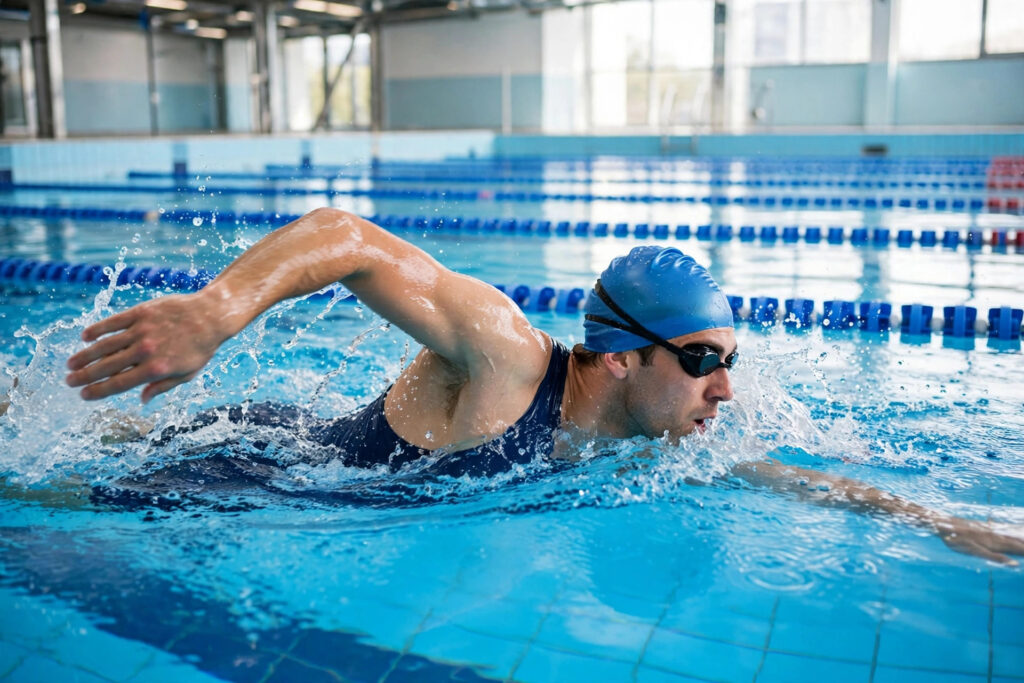
Freestyle, also called front crawl, burns the most calories for most swimmers, because it uses the arms, legs, and core in a fast and continuous rhythm. It suits people who already feel comfortable with face in the water breathing. Beginners can start with short freestyle bursts mixed with rest at the wall, and build length slowly over weeks.
Breaststroke burns fewer calories per minute than freestyle, but it suits beginners far better, because the head stays above water and breathing feels natural. It still works the legs, chest, and arms well, and it is the stroke most new swimmers enjoy most. Backstroke sits in the middle, with good calorie burn and an easy breathing pattern, and it helps posture by strengthening the upper back.
Butterfly burns the most calories of all, but it demands high fitness and good technique, so it suits advanced swimmers only. For fat loss, the best stroke is the one a swimmer can hold for 20 to 30 minutes without stopping often. Mixing two strokes in one session, such as freestyle and breaststroke, keeps training fresh and spreads effort across more muscles.
Swimming Compared With Running And Walking
Compared with running, swimming burns a similar number of calories per hour at a moderate effort, but with far less impact on knees, hips, and ankles. Running pounds the joints with every stride, while water supports the body weight and cushions every movement. That difference makes swimming the safer choice for heavier people, older adults, and anyone with sore knees.
Compared with walking, swimming wins on calorie burn per minute and on full body muscle use. Walking remains excellent for daily movement and it needs no pool, so the two pair well together. A week with 2 pool sessions and daily walks beats a week with only one of the two, because variety keeps training fresh and spreads the load across different muscles.
Swimming also cools the body, which helps people who overheat fast during land workouts. The only real drawback is access, because a pool needs membership or a public facility, while walking and running need only shoes and a road. For people with pool access, swimming deserves a fixed place in the weekly fat loss plan.
A Simple Swimming Plan For Beginners
Beginners who start swimming for weight loss should focus on consistency first. Week one should stay easy, with 2 sessions of 20 minutes, mixing short swims with rest at the wall. Swim one pool length, rest for 30 seconds, and repeat. The goal in week one is comfort in the water, not speed or distance.
In week two and week three, build toward 30 minute sessions, 2 to 3 times per week, with longer swims and shorter rests. Try alternating freestyle and breaststroke lengths to learn both strokes without boredom. By the end of week three, most beginners can swim for several minutes without stopping, which is a bigger achievement than it sounds.
In week four to week six, move toward 30 to 45 minute sessions, 3 times per week, with steady pacing and short faster bursts. Increase total weekly time by about 10 percent per week at most, and never double the volume suddenly, because sudden jumps cause shoulder soreness and fatigue. Track sessions in a notebook or a phone note, because visible progress keeps motivation alive.
Swimming Technique That Protects Shoulders And Knees
Good technique matters more than speed in the pool. In freestyle, the body should stay long and flat, with the head in line with the spine and eyes looking at the pool floor. Arms should enter the water in front of the shoulders, not across the body, and the kick should stay small and steady from the hips, not from the knees.
Shoulder pain is the most common swimming complaint, and it usually comes from overreaching, crossing arms in front of the head, or sudden volume jumps. A relaxed recovery, with the elbow slightly bent, protects the shoulder far better than a stiff straight arm swing. Breaststroke kick needs care too, because a wide and forceful frog kick can stress the knees, so keep the kick narrow and controlled.
Breathing rhythm also matters. In freestyle, breathe to one side every two or three strokes, and exhale steadily under water instead of holding the breath. A short warm up of easy lengths and gentle arm circles prepares the shoulders, and a slow cool down with easy swimming and light stretching ends every session well.
Common Swimming Mistakes That Slow Fat Loss
The biggest mistake is swimming too slowly without ever raising the heart rate. A gentle float with long chats at the wall burns few calories, no matter how long the session lasts. Fat loss needs a steady moderate effort, where breathing feels harder than rest but conversation stays possible in short sentences.
Another common error is skipping leg work. Many beginners pull hard with the arms while the legs drag behind, which wastes energy and halves the calorie burn. A steady flutter kick or breaststroke kick keeps the full body working and the heart rate higher. Eating a large meal right before swimming is a smaller error, but it causes discomfort and cuts sessions short, so keep pre swim meals light and finish them about one hour before the pool.
Inconsistency ruins more plans than any technique fault. One hard session followed by two weeks off never builds fitness or burns meaningful fat. Two to three steady sessions per week beat heroic monthly efforts. Skipping rest days has the opposite effect too, because tired shoulders and sore muscles need quiet days to grow stronger.
How To Combine Swimming With Healthy Eating
Swimming works best inside a simple daily routine. Pair 2 to 3 pool sessions per week with daily walking, and keep food portions honest. Protein at every meal protects muscle while fat drops, and vegetables fill the plate with volume and fiber for very few calories. Water helps as well, since thirst often feels like hunger, and sugary drinks can quietly erase a full pool session.
Hunger after swimming deserves special attention, because cool water and hard effort often raise appetite more than land workouts do. A protein rich snack after the pool, such as yogurt, eggs, or a small chicken portion, satisfies hunger without adding hundreds of extra calories. Planning that snack before the session prevents the post swim rush toward fast food.
Sleep plays a larger role than most people expect. Poor sleep raises hunger hormones and lowers the energy for training, which makes belly fat loss harder even with a good workout plan. Progress should be judged by more than the scale, because swimming builds lean muscle even in weeks when the scale moves slowly. Measurements, photos, and how clothes fit tell a fuller story than weight alone.
FAQs
Is swimming good for weight loss for beginners?
Yes, swimming is an excellent choice for beginners, because water supports the body weight and removes joint impact while still burning a high number of calories. A slow and steady session of 20 to 30 minutes, 2 to 3 times per week, builds fitness without the knee and ankle stress of running. Beginners burn fewer calories at first because rest breaks are frequent, but skill and stamina improve fast, and within three to four weeks most people swim longer stretches. Combined with sensible eating, beginner swimming produces steady fat loss and a stronger full body.
How many calories does swimming burn in 30 minutes?
Most adults burn around 200 to 350 calories in 30 minutes of steady swimming, depending on stroke, speed, and body weight. Freestyle at a moderate pace burns more than relaxed breaststroke, and heavier swimmers burn more than lighter ones in the same time.
A person who weighs around 70 kilograms might burn roughly 250 to 300 calories in 30 minutes of steady freestyle. Fast intervals raise the number further, but steady and repeatable sessions matter more for fat loss than one exhausting swim that needs days of recovery.
How many times per week should I swim to lose weight?
Most people do well with 2 to 3 swimming sessions per week, 30 to 45 minutes each, at a steady moderate pace. That frequency creates a meaningful weekly calorie deficit without overloading the shoulders. Beginners should start with 2 sessions of 20 to 30 minutes and add time slowly over weeks.
Daily swimming is possible for experienced swimmers, but rest days help muscles and shoulders recover, and recovery is part of progress. Pairing pool days with daily walking delivers faster results than swimming alone.
Which swimming stroke is best for weight loss?
Freestyle burns the most calories for most swimmers, because it uses the arms, legs, and core in a fast continuous rhythm. Breaststroke suits beginners better, because breathing feels natural and the head stays above water, even though it burns fewer calories per minute.
Backstroke sits in the middle, with good calorie burn and posture benefits. Butterfly burns the most of all, but it demands high fitness. For fat loss, the best stroke is the one a swimmer can hold for 20 to 30 minutes, and mixing two strokes in one session keeps training fresh.
Conclusion
Swimming is one of the kindest and most effective fat loss workouts, because it burns a high number of calories while protecting the joints. So swimming for weight loss works best as part of a steady weekly routine, not as a rare splash. Start with short and comfortable sessions, build time slowly, mix strokes for variety, and pair pool days with walking and sensible eating. That steady combination turns pool time into real and lasting fat loss, and it keeps the body strong, mobile, and pain free for years.
2 Responses