- Rebounding means bouncing on a mini trampoline, because low impact jumps protect knees while burning real calories.
- A 30 minute rebounding session burns around 200 to 300 calories, with balance, lymph flow, and leg strength as extra benefits.
- The danger is bad form, because bouncing too high or landing flat can strain ankles and knees.
- The best results come when short daily sessions pair with strength moves, protein rich meals, and steady calorie control.
Rebounding For Weight Loss And How It Works
When people ask about rebounding for weight loss, they usually want to know if bouncing on a mini trampoline really burns fat. The answer is yes, and the reason is simple. Bouncing drives the leg muscles again and again, which raises the heart rate, burns calories, and builds balance. The trampoline mat absorbs most of the impact, so knees and ankles stay safe while the workout stays intense.
Rebounding also works the whole body, because every bounce engages the core, the legs, and the arms when they move with the rhythm. The up and down motion supports lymph flow, which helps the body move fluid and waste, and it trains balance in a way that flat ground never does. A fun workout gets done more often, and consistency is what burns fat over weeks.
The best part is the low barrier. A mini trampoline fits in a living room, needs no gym membership, and a session can happen in front of a show or music. Start with 10 minutes a day, build toward 30 minutes, and let the habit grow slowly. The best workout is the one that actually happens week after week.
Rebounding Calories And Health Benefits
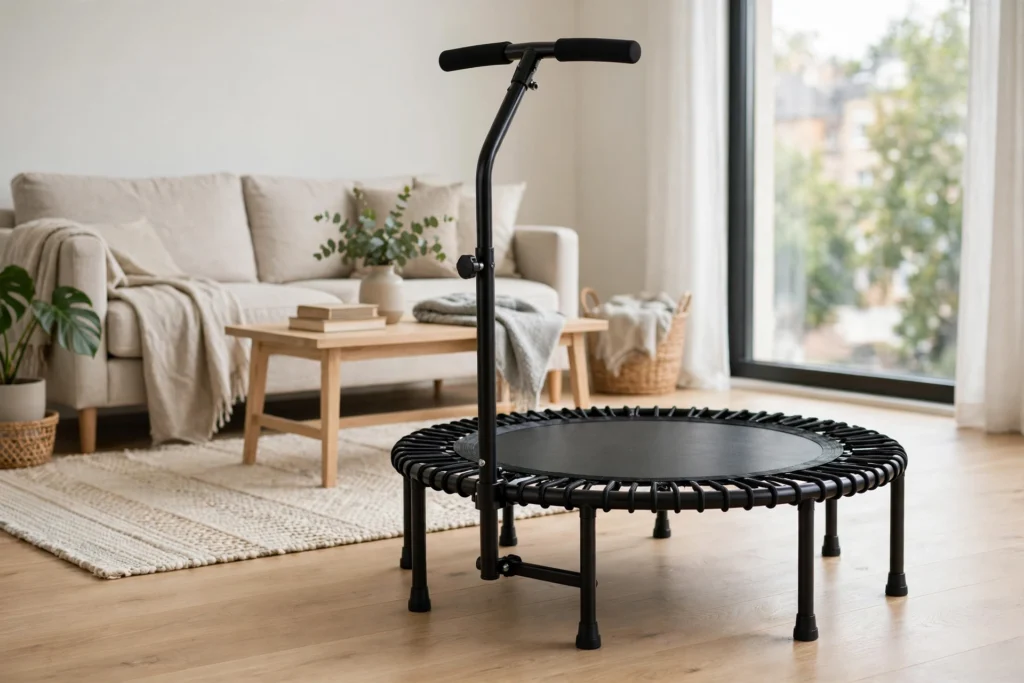
A 30 minute rebounding session at a moderate pace burns around 200 to 300 calories, depending on body weight and bounce intensity. Hard intervals with high knees can push past 350 calories in 30 minutes, although very few beginners can hold that effort for long. A person who weighs around 70 kilograms might burn roughly 250 calories in 30 minutes at a steady pace.
The health benefits go beyond calories. Rebounding strengthens the leg muscles and the core, improves balance and coordination, and supports bone density through gentle impact. The bouncing motion also supports lymph flow, which helps the immune system move fluid through the body. Many people report better mood and energy after a short bounce, because rhythmic movement lifts the spirits.
Joint safety is the biggest advantage. Studies show that rebounding creates less impact on knees and ankles than running, because the mat absorbs up to 80 percent of the shock. That difference makes rebounding a smart choice for heavier people, older adults, and anyone with sore knees. Always bounce with soft knees and a straight back, and stop if any joint feels sharp pain.
Best Rebounding Workouts For Fat Loss
The health bounce is the best starting workout for fat loss. Stand with feet shoulder width apart, bend the knees slightly, and bounce gently without leaving the mat. This effort burns fat steadily, builds balance, and leaves enough energy for the next session. Beginners should master the health bounce before trying harder moves.
Jogging in place on the rebounder burns more calories once basic balance exists. Lift the knees one at a time, swing the arms naturally, and keep the bounce low and controlled. Repeat for 2 minutes, then return to the health bounce for 1 minute, and repeat the cycle 5 to 6 times. The intervals raise the heart rate sharply, and the body keeps burning extra calories for a while after the session ends.
Jumping jacks and twist jumps add variety and core work. Spread the legs wide and raise the arms on each bounce for jumping jacks, then twist the hips side to side for twist jumps. High knees with a fast rhythm suit people with at least 3 to 4 weeks of steady bouncing behind them. Mixing gentle bounces, jogging, and twists across the week keeps training fresh and prevents boredom.
A Simple Rebounding Plan For Beginners
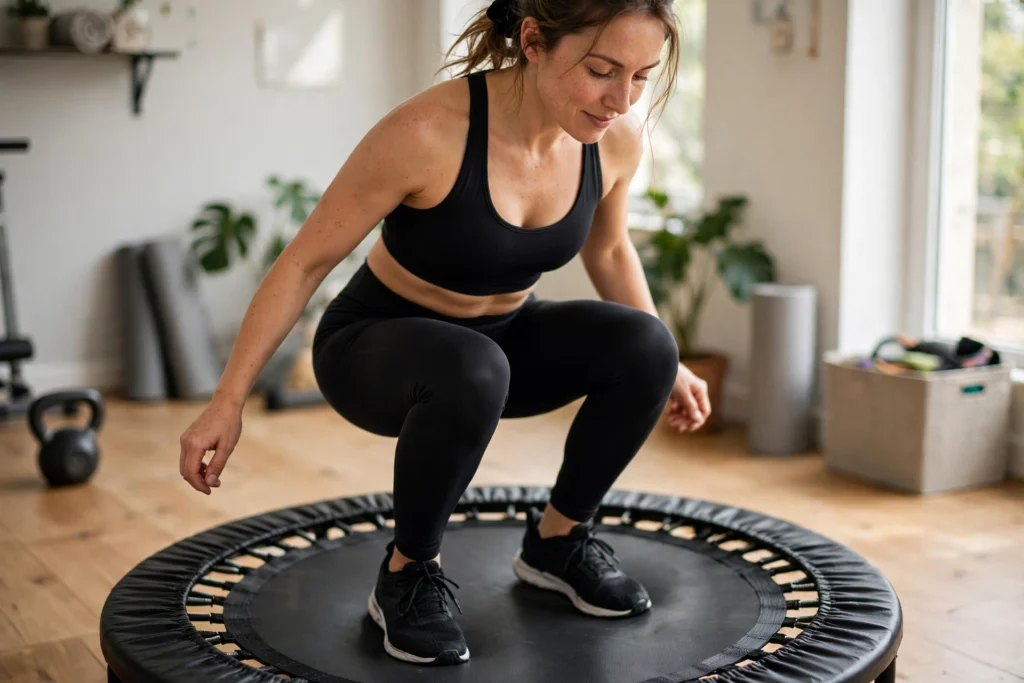
Beginners who start rebounding for weight loss should focus on consistency first. Week one should stay easy, with 5 sessions of 10 minutes at a gentle pace. Keep the bounce low, hold a chair or a wall for balance if needed, and stop if knees or ankles feel sharp pain. The goal in week one is comfort on the mat, not speed or height.
In week two and week three, build toward 15 to 20 minute sessions, 4 to 5 times per week, with slightly higher bounces. Try one interval session per week, with short jogging bursts mixed with gentle bouncing. By the end of week three, most beginners can bounce for 20 minutes without stopping, which is a bigger achievement than it sounds.
In week four to week six, move toward 25 to 30 minute sessions, 4 to 5 times per week, mixing health bounces, jogging, and twists. Increase total weekly time by about 10 percent per week at most, and never double the volume suddenly, because sudden jumps cause ankle soreness and fatigue. Track sessions in a notebook or a phone, because visible progress keeps motivation alive.
Rebounding Compared With Running And Walking
Shoppers who wonder if rebounding for weight loss beats running often compare the calories first. A 30 minute run burns around 300 to 400 calories, while a 30 minute rebounding session burns around 200 to 300 calories. Running wins on calories per minute, but rebounding wins clearly on joint safety, because the mat absorbs the shock that running sends straight into the knees.
Compared with walking, rebounding wins on calorie burn per minute and on leg muscle use. Walking remains excellent for daily movement and it needs no equipment, so the two pair well together. A week with 3 rebounding sessions and daily walks beats a week with only one of the two, because variety keeps training fresh and spreads the load across different muscles.
Rebounding also wins on weather independence and fun, since every session happens indoors at any hour and feels like play. The only real drawback is cost, because a good rebounder needs buying, while walking needs only shoes. For people with a rebounder at home, bouncing deserves a fixed place in the weekly fat loss plan.
How To Choose A Mini Trampoline For Home
Anyone who starts rebounding for weight loss at home needs a rebounder that fits the body and the room. Look for a mat size of 36 to 40 inches, which gives enough room for safe bouncing without hitting the edge. A weight limit of at least 100 kilograms suits most adults, and a higher limit means a stronger frame.
Bungee cords beat metal springs for home use, because bungees bounce quieter and softer, which suits apartments and early mornings. Metal springs last longer and cost less, but they squeak and feel harder on the joints. A handlebar helps beginners with balance, and it folds away once confidence grows.
Check the feet and the frame before buying, because rubber feet protect the floor and stop the rebounder from sliding. Foldable legs help storage in small rooms, and a carry bag helps people who travel. Spend a little more on a stable frame, because a wobbly rebounder ruins form and kills motivation fast.
Common Rebounding Mistakes That Waste Effort
The biggest mistake is bouncing too high with stiff legs, which feels exciting but sends shock into the knees and ankles. Fat loss needs controlled bounces with soft knees, where the feet barely leave the mat and the muscles feel the work. Big jumps with no control are closer to play than training, no matter how long the session lasts.
Another common error is bouncing with a rounded back and locked arms, which causes neck and back pain and cuts sessions short. Keep the chest open, shoulders relaxed, and arms swinging naturally instead of hanging stiff. A short warm up of gentle bouncing for 5 minutes prepares the joints and muscles, and a slow cool down ends every session well.
Inconsistency ruins more plans than any form fault. One long bounce followed by two weeks off never builds fitness or burns meaningful fat. Three to four steady sessions per week beat heroic monthly efforts. Skipping rest days has the opposite effect too, because tired legs and sore ankles need quiet days to grow stronger.
How To Combine Rebounding With Healthy Eating
Rebounding works best inside a simple daily routine. Bounce 3 to 4 times per week, pair it with daily walking, and keep food portions honest. Protein at every meal protects muscle while fat drops, and vegetables fill the plate with volume and fiber for very few calories. Water helps as well, since thirst often feels like hunger, and sugary drinks can quietly erase a full bounce session.
Hunger after a rebounding for weight loss session deserves attention, because hard sessions often raise appetite more than expected. A protein rich snack after the bounce, such as yogurt, eggs, or a small chicken portion, satisfies hunger without adding hundreds of extra calories. Planning that snack before the session prevents the post bounce rush toward fast food.
Sleep plays a larger role than most people expect. Poor sleep raises hunger hormones and lowers the energy for training, which makes weight loss harder even with a good workout plan. Progress should be judged by more than the scale, because rebounding builds leg muscle even in weeks when the scale moves slowly. Measurements, photos, and how clothes fit tell a fuller story than weight alone.
FAQs
Is rebounding good for weight loss?
Yes, rebounding can support weight loss, because a 30 minute session burns around 200 to 300 calories while protecting the knees and ankles. Weight loss depends on the total daily calorie deficit, not on one single workout. The mat absorbs most of the impact, so heavier people and older adults can bounce safely. Pair 3 to 4 sessions per week with walking, protein rich meals, and good sleep, and the fat loss adds up steadily over weeks and months.
How many calories does 30 minutes of rebounding burn?
Most adults burn around 200 to 300 calories in 30 minutes of steady rebounding, depending on body weight and bounce intensity. A person who weighs around 70 kilograms might burn roughly 250 calories in 30 minutes at a steady pace. Hard intervals with high knees can push past 350 calories in 30 minutes, but steady and repeatable sessions matter more for fat loss than one exhausting bounce that needs days of recovery.
How long should I rebound each day to lose weight?
Most people do well with 20 to 30 minute rebounding sessions, 3 to 4 times per week, at a steady moderate pace. That frequency creates a meaningful weekly calorie deficit without overloading the knees and ankles. Beginners should start with 10 minute sessions, 5 times per week, and add time slowly over weeks. Daily bouncing is possible for experienced rebounders, but rest days help legs and ankles recover, and recovery is part of progress.
Is rebounding better than running for weight loss?
A 30 minute run burns around 300 to 400 calories, while a 30 minute rebounding session burns around 200 to 300 calories, so running wins on calories per minute. Rebounding beats running clearly on joint safety, because the mat absorbs up to 80 percent of the shock that running sends straight into the knees. For heavier people, older adults, or anyone with sore knees, rebounding is the smarter choice, and the best workout is always the one that gets done consistently.
Is rebounding safe for beginners with bad knees?
Yes, rebounding is one of the safest workouts for beginners with sore knees, because the trampoline mat absorbs most of the impact that running and jumping send into the joints. Start with the health bounce, where the feet never leave the mat, keep the knees soft, and hold a chair or a wall for balance if needed. Stop if any joint feels sharp pain, and build time slowly over weeks. People with serious knee injuries should check with a doctor before starting any new workout.
Conclusion
A mini trampoline is one of the most fun fat loss tools, because it burns a good number of calories while protecting the joints and fitting into any living room. So rebounding for weight loss works well, but only as part of a steady weekly routine, not as a rare bounce. Start with short and gentle sessions, build time slowly, mix health bounces with jogging, and pair bounce days with walking and sensible eating. That steady combination turns indoor bouncing into real and lasting fat loss, and it keeps the legs strong and the knees safe for years.