- A stationary bike burns 400 to 600 calories per hour at a moderate pace, while keeping knees, hips, and ankles safe from impact.
- It suits every fitness level, because resistance and speed adjust in seconds, from gentle pedaling to hard intervals.
- Most beginners do well with 3 to 4 sessions per week, 20 to 30 minutes each, at a steady and comfortable effort.
- The fastest results come when cycling pairs with strength moves, protein rich meals, good sleep, and steady calorie control.
Stationary Bike For Weight Loss And How It Burns Fat
When people ask about stationary bike for weight loss, they usually want to know if indoor cycling really burns enough fat to matter. The answer is yes, and the reason is simple. Pedaling drives the large leg muscles again and again, which raises the heart rate, burns a high number of calories, and builds lower body strength. The bike supports body weight, so knees and ankles stay safe while the workout stays intense.
Indoor cycling also removes the barriers that stop many people from exercising. No traffic, no bad weather, and no worry about balance on a road bike. A session can happen early in the morning or late at night, in front of a show or music, which makes consistency far easier. The best workout is the one that actually happens week after week, and the stationary bike makes showing up simple.
Muscle built on the bike also helps after the session ends. Lean muscle burns more energy than fat even at rest, so stronger legs raise daily energy use by a small amount over time. Cycling alone never replaces food control, but inside a sensible plan, it is one of the most reliable and joint friendly fat loss workouts available.
How Many Calories A Stationary Bike Burns

Calorie burn on a stationary bike depends on resistance, speed, and body weight. At a light and easy pace, most people burn around 300 to 400 calories per hour. At a steady moderate pace, the number rises to around 400 to 600 calories per hour. Hard intervals with high resistance can push past 600 calories per hour, although very few beginners can hold that effort for long.
Body weight changes the numbers in a clear way. A person who weighs around 60 kilograms might burn roughly 300 to 400 calories in 45 minutes at a steady pace. A person who weighs around 70 kilograms might burn roughly 400 to 500 calories in the same session. A person who weighs around 85 kilograms might burn roughly 500 to 600 calories, because a heavier body needs more energy for every pedal stroke.
The honest answer about stationary bike for weight loss is that it works well, but only with regular sessions and sensible eating. Three to four sessions per week at a steady pace create a meaningful weekly calorie deficit, especially when sugary drinks and large snacks stay under control. One weekly ride never beats a steady routine.
Stationary Bike Compared With Running And Walking
Compared with running, a stationary bike burns a similar number of calories per hour at a moderate effort, but with far less impact on knees, hips, and ankles. Running pounds the joints with every stride, while cycling supports body weight on a seat and moves the legs in smooth circles. That difference makes the bike the safer choice for heavier people, older adults, and anyone with sore knees.
Compared with walking, the bike wins on calorie burn per minute and on lower body muscle use. Walking remains excellent for daily movement and it needs no equipment, so the two pair well together. A week with 3 bike sessions and daily walks beats a week with only one of the two, because variety keeps training fresh and spreads the load across different muscles.
The bike also wins on weather independence and safety, since every session happens indoors at any hour. The only real drawback is cost, because a good bike needs buying or a gym membership, while walking needs only shoes. For people with a bike at home, cycling deserves a fixed place in the weekly fat loss plan.
Best Stationary Bike Workouts For Fat Loss
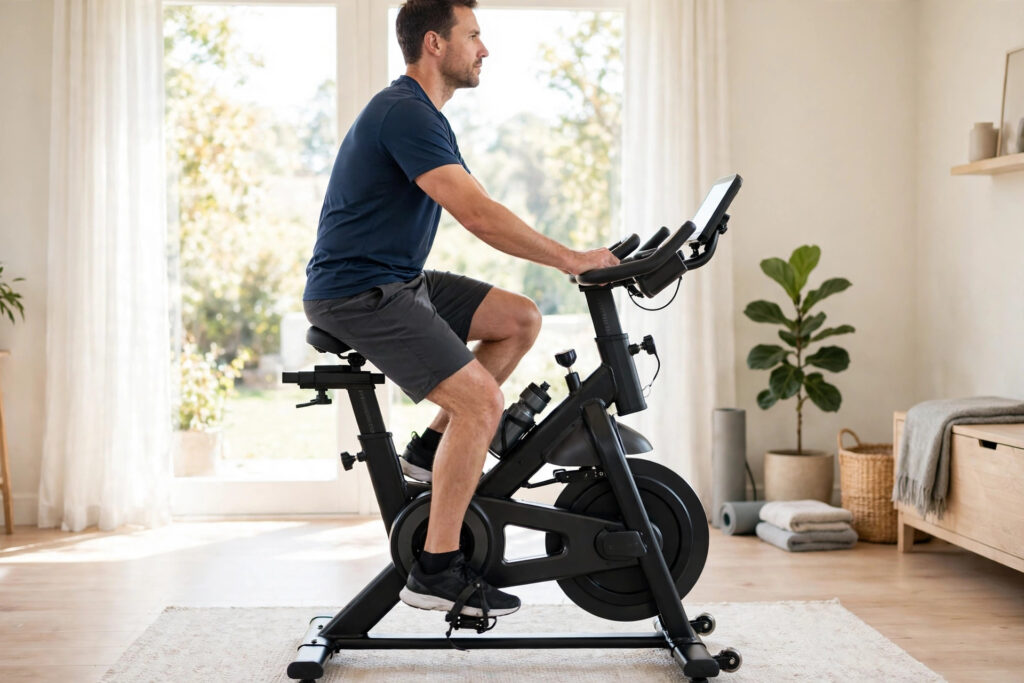
Steady state cycling is the best starting workout for fat loss. Ride at a moderate pace for 20 to 30 minutes, where breathing feels harder than rest but conversation stays possible in short sentences. This effort burns fat steadily, builds stamina, and leaves enough energy for the next session. Beginners should master steady rides before trying harder workouts.
Interval training burns more calories in less time once basic fitness exists. Pedal hard for 30 seconds, then easy for 90 seconds, and repeat 6 to 8 times. The hard bursts raise the heart rate sharply, and the body keeps burning extra calories for a while after the session ends. Intervals suit people with at least 3 to 4 weeks of steady riding behind them.
Hill simulations add variety and leg strength. Raise the resistance every few minutes, as if climbing a slope, then lower it again for recovery. Long slow rides of 45 to 60 minutes once per week build endurance and burn a large total of calories. Mixing steady rides, intervals, and hills across the week keeps training fresh and prevents boredom.
A Simple Stationary Bike Plan For Beginners
Beginners who start stationary bike for weight loss should focus on consistency first. Week one should stay easy, with 3 sessions of 20 minutes at a light to moderate pace. Keep resistance low, pedal smoothly, and stop if knees or back feel sharp pain. The goal in week one is comfort on the bike, not speed or distance.
In week two and week three, build toward 30 minute sessions, 3 to 4 times per week, with slightly higher resistance. Try one interval session per week, with short hard bursts mixed with easy pedaling. By the end of week three, most beginners can ride for 30 minutes without stopping, which is a bigger achievement than it sounds.
In week four to week six, move toward 30 to 45 minute sessions, 3 to 4 times per week, mixing steady rides and intervals. Increase total weekly time by about 10 percent per week at most, and never double the volume suddenly, because sudden jumps cause knee soreness and fatigue. Track sessions in a notebook or a phone note, because visible progress keeps motivation alive.
Correct Bike Setup That Protects Knees And Back
Correct setup matters more than speed on a stationary bike. Set the seat height so the knee stays slightly bent at the bottom of each pedal stroke. A seat set too low forces deep knee bending and causes front knee pain, while a seat set too high makes the hips rock side to side and strains the lower back.
Seat position forward and back also matters. When the pedals sit level, the front knee should sit roughly above the foot. Handlebars should sit near seat height for beginners, not far below, so the back stays relaxed instead of hunched. Feet should sit flat on the pedals, with the ball of the foot over the pedal center, and straps snug but not tight.
Posture completes the setup. Keep the chest open, shoulders relaxed, and hands light on the handlebars instead of gripping hard. A short warm up of easy pedaling for 5 minutes prepares the knees and muscles, and a slow cool down with gentle pedaling and light stretching ends every session well.
Common Stationary Bike Mistakes That Waste Effort
The biggest mistake is pedaling with resistance set too low and speed too high, which feels busy but burns few calories. Fat loss needs real effort against resistance, where legs feel the work and breathing rises. Spinning fast with no load is closer to fidgeting than training, no matter how long the session lasts.
Another common error is hunching over the handlebars with a rounded back, which causes neck and back pain and cuts sessions short. Sitting tall with a light grip keeps the spine safe and the ride comfortable. Gripping the handlebars hard and leaning body weight on the arms is a smaller error, but it removes work from the legs and tires the shoulders fast.
Inconsistency ruins more plans than any setup fault. One hard ride followed by two weeks off never builds fitness or burns meaningful fat. Three to four steady sessions per week beat heroic monthly efforts. Skipping rest days has the opposite effect too, because tired legs and sore knees need quiet days to grow stronger.
How To Combine Cycling With Healthy Eating
Cycling works best inside a simple daily routine. Pair 3 to 4 bike sessions per week with daily walking, and keep food portions honest. Protein at every meal protects muscle while fat drops, and vegetables fill the plate with volume and fiber for very few calories. Water helps as well, since thirst often feels like hunger, and sugary drinks can quietly erase a full bike session.
Hunger after cycling deserves attention, because hard rides often raise appetite more than expected. A protein rich snack after the ride, such as yogurt, eggs, or a small chicken portion, satisfies hunger without adding hundreds of extra calories. Planning that snack before the session prevents the post ride rush toward fast food.
Sleep plays a larger role than most people expect. Poor sleep raises hunger hormones and lowers the energy for training, which makes fat loss harder even with a good workout plan. Progress should be judged by more than the scale, because cycling builds leg muscle even in weeks when the scale moves slowly. Measurements, photos, and how clothes fit tell a fuller story than weight alone.
FAQs
Is a stationary bike good for weight loss for beginners?
Yes, a stationary bike is an excellent choice for beginners, because it supports body weight, removes joint impact, and lets resistance adjust in seconds. A steady session of 20 to 30 minutes, 3 to 4 times per week, burns a meaningful number of calories without the knee stress of running. Beginners burn fewer calories at first because fitness is low, but stamina improves fast, and within three to four weeks most people ride longer sessions. Combined with sensible eating, beginner cycling produces steady fat loss and stronger legs.
How many calories does 30 minutes on a stationary bike burn?
Most adults burn around 200 to 350 calories in 30 minutes of steady stationary cycling, depending on resistance, speed, and body weight. A moderate pace burns more than a light spin, and heavier riders burn more than lighter ones in the same time. A person who weighs around 70 kilograms might burn roughly 250 to 300 calories in 30 minutes at a steady moderate pace. Interval sessions raise the number further, but steady and repeatable rides matter more for fat loss than one exhausting ride that needs days of recovery.
How many times per week should I ride a stationary bike to lose weight?
Most people do well with 3 to 4 stationary bike sessions per week, 30 to 45 minutes each, at a steady moderate pace. That frequency creates a meaningful weekly calorie deficit without overloading the knees. Beginners should start with 3 sessions of 20 to 30 minutes and add time slowly over weeks. Daily riding is possible for experienced cyclists, but rest days help legs and knees recover, and recovery is part of progress. Pairing bike days with daily walking delivers faster results than cycling alone.
Is a stationary bike better than running for weight loss?
A stationary bike matches running on calorie burn per hour at a moderate effort, while beating it clearly on joint safety. Running pounds knees, hips, and ankles with every stride, while cycling moves the legs in smooth circles with body weight supported. Running burns slightly more calories per minute at high speeds and needs no equipment, so it suits fit people with healthy joints. For heavier people, older adults, or anyone with sore knees, the bike is the smarter choice, and the best workout is always the one that gets done consistently.
Does a stationary bike reduce belly fat on its own?
No single workout can target belly fat alone, because the body decides where fat comes from based on genetics and hormones, not based on which muscles move. Stationary cycling burns calories and builds leg muscle, so belly fat shrinks as total body fat drops, but only when a calorie deficit exists.
A bike routine combined with walking, protein rich meals, and good sleep reduces belly fat steadily over weeks and months. Patience matters, because belly fat is often the last area to change, even with a strong cycling routine.
Conclusion
A stationary bike is one of the most practical fat loss tools, because it burns a high number of calories while protecting the joints and fitting into any schedule. So stationary bike for weight loss works best as part of a steady weekly routine, not as a rare ride. Start with short and comfortable sessions, build time slowly, mix steady rides with intervals, and pair bike days with walking and sensible eating. That steady combination turns indoor cycling into real and lasting fat loss, and it keeps the legs strong and the knees safe for years.